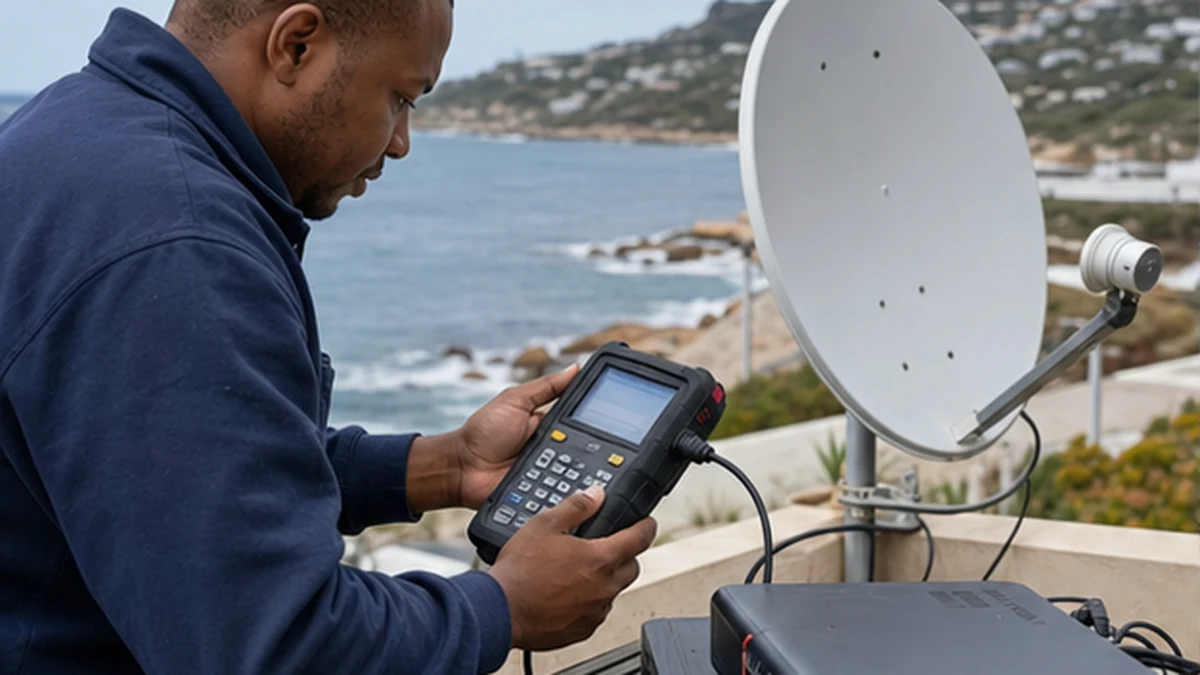
An E48-32 message points you towards a signal-reception problem, but it does not identify one failed part by itself. The interruption could be temporary, local to one cable connection or part of a wider dish and signal-path issue. A calm sequence of checks is more useful than resetting everything or buying parts at random. This guide follows a decision path and keeps unsafe roof work out of the process.
What E48-32 means in Simon's Town homes
Start by reading the complete message shown on screen and noting which decoder displays it. If the property has more than one viewing point, check whether every connected television is affected. One affected point suggests a more local connection or decoder-path issue. Several affected points can indicate a shared part of the signal path, although proper testing is still needed.
The official DStv page for the E48-32 error code can confirm the current provider guidance. Treat the code as a symptom category, not a diagnosis. Record when it appeared, whether pictures break up before the message arrives and whether anything at the property recently changed.
First checks for a DStv E48-32 error in Simon's Town
Look outside from a safe position. Heavy rain or severe weather can temporarily weaken satellite reception. If the error began during poor weather, wait until conditions have clearly passed before deciding that equipment has failed. Do not climb onto a wet roof or try to move a dish in wind.
Next, check only connections that are designed to be accessible to the user. Make sure the decoder has power and that the signal cable at the decoder is seated correctly. Switch the decoder off at the wall before handling its connections. Look for a loose plug, a sharply bent lead or obvious damage. Do not open the decoder or disturb fixed electrical wiring.
Restart the decoder once after confirming the connections. Repeated restarts are not a repair and can hide the sequence of events. If the message returns, note how quickly it returns and whether any channels appear first. Those observations can help with later decoder and reception fault checks.
Follow the symptom through the signal path
If only one decoder is affected, compare it with another working point without swapping installed cables blindly. A working point shows that at least part of the shared system is receiving a signal. It does not prove that the affected decoder is faulty. The feed, connector, wall outlet or distribution path serving that point may still be the cause.
If all points fail together, think about shared components. The dish may have shifted, an exterior connector may have deteriorated or a common cable path may be compromised. Coastal exposure can be relevant, but appearance alone is not proof. Proper measurements at sensible points in the system help locate where the signal is lost.
Visible dish movement, building work near a cable, recent drilling or vegetation crossing the line of sight are worth reporting. Do not loosen bolts to test a theory. Small dish movements can matter, and unmeasured adjustment can turn an intermittent fault into complete signal loss. The correct next step may be dish realignment with signal testing.
When Simon's Town signal testing is sensible
Arrange testing when the error remains after settled weather, one careful restart and accessible connection checks. Testing is also sensible when the fault repeats, several viewing points are affected or there is visible cable damage. Give the technician the error wording, the affected points and the observations you recorded.
A structured visit should examine the path rather than replace the nearest component by guesswork. That can include decoder readings, accessible cable and connector condition, distribution equipment, dish alignment and line of sight. If the dish or cable has physically failed, the findings should support the proposed repair.
In a flat or managed building, ask whether neighbours on the same distribution system are affected. Do not enter locked service areas. The building manager may need to provide access to shared equipment, and the fault may belong to a communal DStv system rather than an individual installation.
What not to change while diagnosing
Do not factory-reset the decoder as an opening move. It can remove settings without repairing a missing satellite signal. Avoid swapping power supplies, splitters or other parts unless their compatibility is known. Also avoid adding improvised cable joins, which introduce another possible fault point and can make diagnosis harder.
Keep XtraView communication faults separate from reception symptoms. A linked decoder can have both issues, but the tests answer different questions. The guide to XtraView heartbeat problems explains the decoder-to-decoder communication path. For E48-32, stay focused on whether a usable satellite signal reaches the affected decoder.
If the installation has been moved or rebuilt recently, record which cables and components were changed. A planned DStv installation assessment may be appropriate where the whole layout is uncertain, but a stable existing system with a new E48-32 message should normally begin with diagnosis.
Questions about E48-32 faults
Can bad weather cause E48-32 in Simon's Town?
Severe rain can interrupt satellite reception temporarily. Wait for conditions to settle and check again. If the message persists in clear conditions or returns often, the signal path should be tested rather than blamed on the weather.
Should I realign the dish myself?
No. Dish work can involve height and precise adjustment. Loosening the mount without measuring signal can worsen the fault. Report any visible movement from ground level and leave access and alignment to someone with suitable equipment.
Does E48-32 mean the decoder is broken?
Not necessarily. The message can arise when a usable satellite signal does not reach the decoder. Cable, connectors, alignment, line of sight and shared distribution may all need consideration before a decoder fault is concluded.
What information helps a technician?
Provide the full message, when it began, the weather at the time, which viewing points are affected and any recent work near the installation. Mention picture breakup, visible damage and the result of one careful restart.