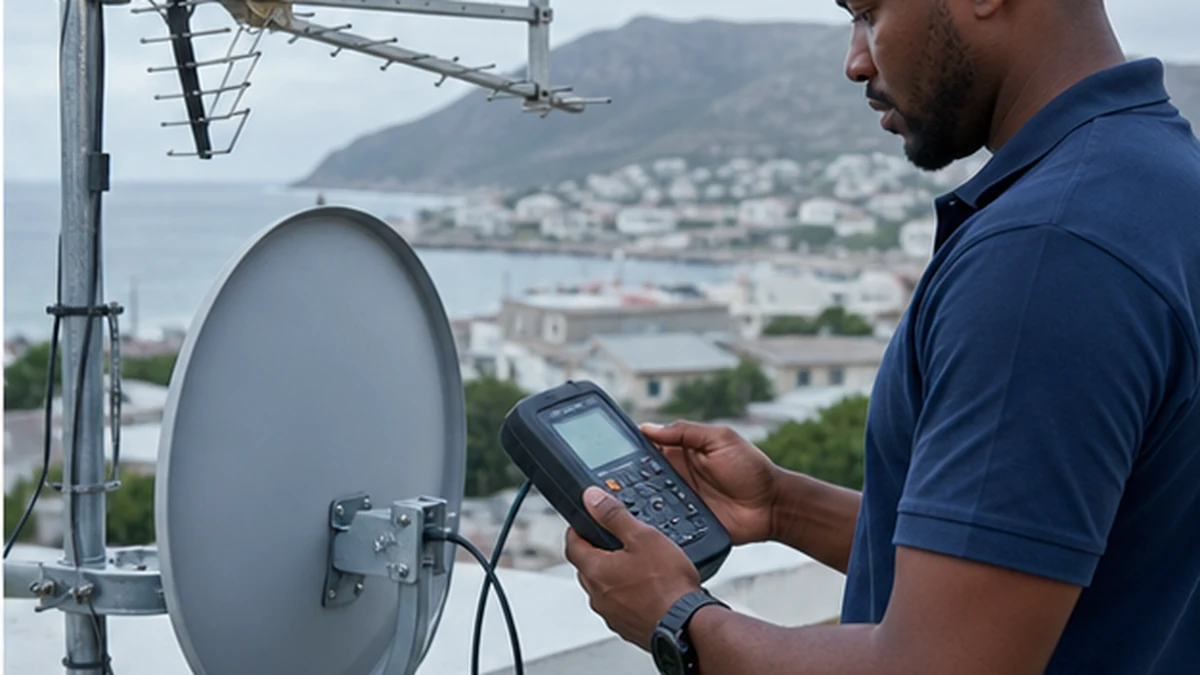
A rooftop aerial and a satellite dish receive different broadcast systems. They are not two shapes of the same antenna. If a television loses channels, identifying the actual source is the first useful step. It prevents an aerial fault from being treated as a decoder problem, or a damaged satellite feed from being blamed on the television.
Follow the signal path in a safe, simple order: viewing platform, receiver, wall point, cable and outdoor antenna. Do not climb onto a roof to identify equipment. Most systems can be narrowed down from the lounge, account details and visible cabling before a technician inspects the external hardware.
What a TV aerial receives
A TV aerial receives terrestrial broadcasts transmitted from land-based infrastructure. Its metal elements may form a bar, grid or directional array. The television may contain the compatible tuner, or a separate terrestrial receiver may sit beside it. The aerial feed generally uses coaxial cable, which is why the plug alone does not always reveal the platform.
Reception depends on suitable coverage, aerial type and direction, cable condition, connectors and any splitters or amplifiers. More amplification is not automatically better. A poor, overloaded or unpowered amplifier can introduce its own faults. The TV aerial installation service is the relevant path when the source has been identified as terrestrial.
What a satellite dish receives
A satellite dish reflects signals to the LNB fitted at the end of its arm. Coax carries those signals to a compatible satellite decoder. DStv and Openview both use satellite reception, but that does not make all dishes, LNBs, alignments or decoders interchangeable. The selected platform determines the compatible arrangement.
Dish alignment is precise. A dish that appears to face roughly the right direction may still have poor signal quality. Loose mounts, damaged cable, water ingress or disturbed connectors can cause similar symptoms. For a confirmed satellite alignment concern, dish realignment and testing is more relevant than aerial work.
Identify the platform in a Simon's Town home
Start with what appears on screen when the system works. A DStv or Openview interface indicates a satellite receiver. A television's own channel menu may indicate terrestrial reception, although smart apps can make the screen less obvious. Check which remote changes live channels and which input the television uses.
Look at the equipment without unplugging unknown cables. A branded decoder or receiver is stronger evidence than the round coax connector itself. Account or setup documents may confirm the platform. If an inherited holiday home has several unused boxes, trace only the connected equipment and do not assume every rooftop antenna is active.
Trace wall points and cabling in Simon's Town
Many homes have old and new cables side by side. A wall plate may connect to an aerial in the roof space, an outdoor aerial, a satellite dish or nothing at all. Splitters can serve several rooms, while a satellite installation may use one or more feeds depending on its design. Labels help, but they should be verified.
Inspect accessible fly leads for crushing, loose plugs and corrosion. Do not open communal cabinets or tamper with another unit's feed. In a sectional-title property, first establish whether reception comes from shared infrastructure. The distinction is explained in the communal multiswitch versus fibre guide.
Coastal moisture and wind can expose weak outdoor joints around Simon's Town. That does not mean every reception loss requires a replacement antenna. A measured signal test at sensible points can separate an outdoor source problem from a failed connector, damaged drop cable or indoor equipment issue.
Match the symptom to the right assessment
If all terrestrial channels break up on every connected television, the shared aerial path deserves attention. If one room alone fails, compare its wall point and fly lead. For satellite viewing, check whether the decoder powers up, whether the correct television input is selected and whether other points using the same dish are affected.
A working decoder moved to a new room may reveal an incompatible or disconnected wall point. A decoder with its own hardware fault belongs with decoder repair assessment. This article does not diagnose decoder error codes. It identifies the platform and signal path so the correct system is tested.
If you are choosing a platform rather than repairing one, keep that decision separate. The Openview versus DStv holiday-home guide compares use cases. Once DStv is chosen, a DStv installation assessment can check the dish, LNB, cable and viewing-point requirements.
Common questions about aerials and dishes
Can a Simon's Town TV use both sources?
Yes, if compatible equipment and separate signal paths are present. The television might use its own tuner for terrestrial channels and an HDMI input for a satellite decoder. Each source still needs its own correct reception system.
Does a round wall socket prove it is an aerial?
No. Aerial and satellite systems both commonly use coaxial cable, although connectors and wall plates can differ. Trace the connected receiver and cable destination rather than judging only by the socket shape.
Why do some channels work while others fail?
Different channel groups can respond differently to signal quality, frequency-related cable loss or platform issues. Record which channels and rooms are affected. A measured test is more useful than repeatedly retuning or moving the antenna.
Should I replace the aerial or dish first?
No. First identify the platform and test the path. Connectors, short fly leads, splitters, alignment, power to active equipment or the receiver itself may be responsible. Replace outdoor hardware only when diagnosis supports it.