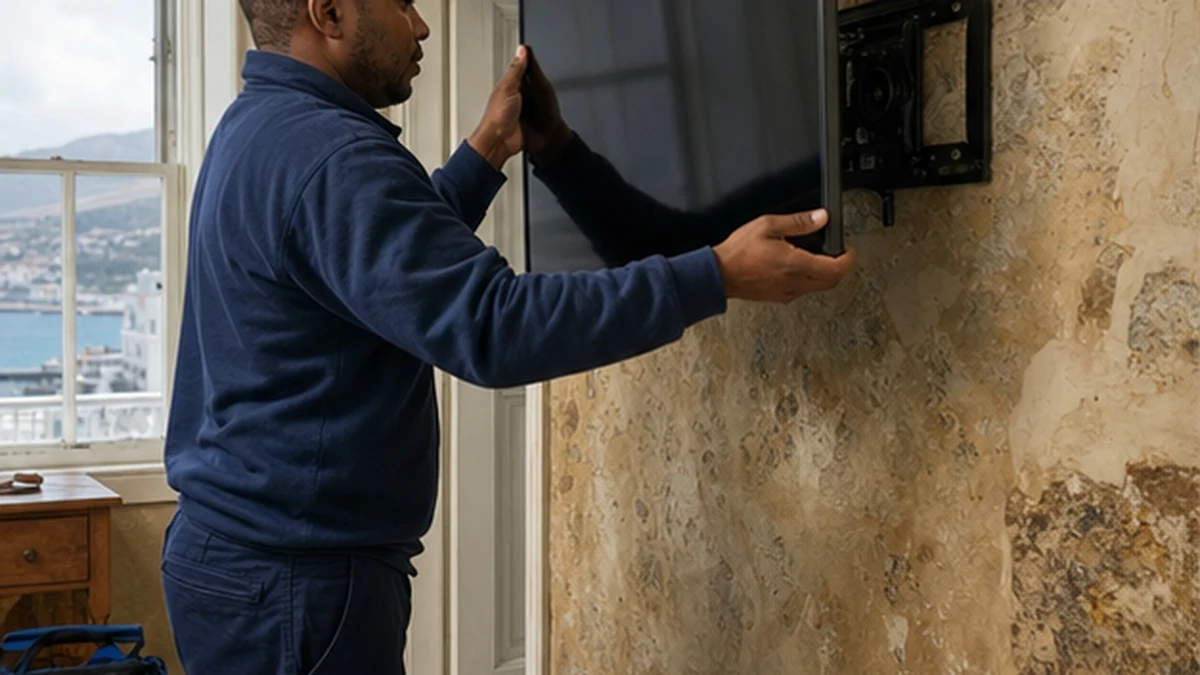
A television mount transfers weight and movement into the wall behind it. In an older Simon's Town property, that wall may be dressed stone, old brick, a thick plaster finish or a later lining fixed in front of historic fabric. The surface appearance is not enough to choose anchors or a drilling position. Good planning starts with the substrate, the significance of the fabric and a cable route that does not create avoidable damage.
Why Simon's Town heritage walls need a plan
Older buildings often contain several construction periods in one room. A wall that looks solid may include soft mortar joints, uneven masonry, voids or a later plasterboard layer. Previous repairs can also behave differently from the original material. The mounting decision must be based on what is actually present at the proposed fixing points.
Heritage character is broader than an official label. Original stone, timber trim, mouldings and old plaster may be features the owner wants to retain. Before work begins, identify which elements are significant and whether permission is required. The service overview for TV wall mounting gives the general installation context, while this guide focuses on substrate and conservation planning.
In a rental or managed property, written consent may be necessary even for an interior wall. If the building has formal heritage controls, the owner should confirm the applicable approval route with the relevant authority. An installer should not be expected to make that legal determination on the owner's behalf.
Identify stone, brick and layered substrates
Stone walls can be irregular behind the finish. Hard units, softer joints and rubble-filled sections do not accept a fixing in the same way. Old brick can also vary in strength, particularly where moisture or previous drilling has affected it. A fixing should not be selected from a generic wall description alone.
Plaster depth matters because the structural support must come from a suitable backing, not a fragile decorative layer. Tapping the surface is not a complete assessment. Existing drawings, visible wall edges and cautious detection methods can provide clues, but uncertainty should remain explicit until the installer can verify the fixing zone.
Modern dry lining may conceal masonry, studs, pipes or electrical cables. Detection and measured positioning are essential before drilling. If a suitable structural position does not align with the preferred screen location, changing the layout can be safer and less intrusive than forcing the original idea.
Choosing a TV position in a Simon's Town room
Start with viewing comfort. Consider the seating position, screen height, glare and the bracket's movement. A full-motion bracket places different leverage on a wall from a fixed bracket, especially when extended. The television and bracket specifications are inputs to the fixing design.
Then review the room itself. Avoid covering mouldings, ventilation openings or features that contribute to the interior. Keep the screen clear of damp patches and heat sources. A freestanding media unit may be a better answer where the wall is highly significant, weak or unsuitable for the intended load.
Plan the decoder and signal connections at the same time. If the room needs a new satellite point, information about DStv installation can help coordinate the route. For terrestrial reception, the requirements may instead relate to TV aerial installation. Coordinating services avoids separate, poorly aligned holes.
Plan discreet and reversible cable routes
A clean result does not always require chasing cables into an old wall. Surface containment painted to suit the room can be more reversible and easier to inspect. Routes may follow existing edges or joinery where this can be done without damaging significant details. The least visible route is not automatically the least harmful one.
Power and signal cables have different requirements. Do not run loose power leads inside a wall or combine services in an improvised channel. A qualified person should handle fixed electrical work. The mounting plan should show where power, HDMI, network and signal connections will finish, with enough space to avoid tight bends behind the television.
If streaming is important, test wireless performance at the proposed screen position before fixing the bracket. Thick masonry can reduce coverage between rooms. A planned Wi-Fi network setup may solve connectivity without adding an awkward visible data cable after mounting.
What the pre-drilling assessment should cover
Record the television weight, bracket type and intended movement. Inspect the proposed wall from both sides where possible. Use suitable detection methods for concealed services and identify the likely substrate and finish depth. The fixing choice and drilling technique should follow those findings and the hardware manufacturer's instructions.
Discuss cable entry points, dust control and protection for floors and furniture. Old finishes can chip beyond the drill point if handled poorly. Agree what will happen if the substrate differs from expectations. Stopping to revise the plan is better than continuing into uncertain material.
For a property move, include photographs and wall notes in the DStv relocation checklist. This helps coordinate the television position with decoder, signal and network needs before equipment arrives. It also separates removable electronics from fixtures that belong to the building.
Questions about mounting on heritage walls
Can any stone wall hold a television?
No general answer is safe. Stone type, joints, wall build-up, condition, television weight and bracket leverage all matter. The actual fixing zone must be assessed before anchors and drill settings are chosen.
Is TV mounting on heritage walls in Simon's Town allowed?
Permission depends on the property, ownership and any applicable controls. Owners should confirm restrictions, while tenants and sectional-title residents should obtain the relevant written approval before drilling.
Must cables be hidden inside the wall?
No. A neat surface route can preserve more original material and remain accessible for future changes. The best option balances appearance, safety, service separation and reversibility.
What if the preferred position is unsuitable?
Consider a different wall zone, a fixed rather than extending bracket, a freestanding solution or another room layout. The screen position should adapt to reliable support and significant building fabric, not override them.